2027 Hyundai Venue: What’s Changing, Release Date, and Pricing for New York Drivers

In New York, the math on a new car works differently. A parking spot is a negotiation, a garage rate is a second car payment, and the vehicle that fits the 20-foot gap on the avenue is worth more than one with a hundred horsepower you will never legally use.
That is the argument for the Hyundai Venue — the smallest and cheapest new vehicle Hyundai sells here, and as of 2026, the cheapest new vehicle anyone sells in America. So the questions we hear most are simple: is a 2027 Venue coming, what changes, and will it cost more than the one on the lot today?
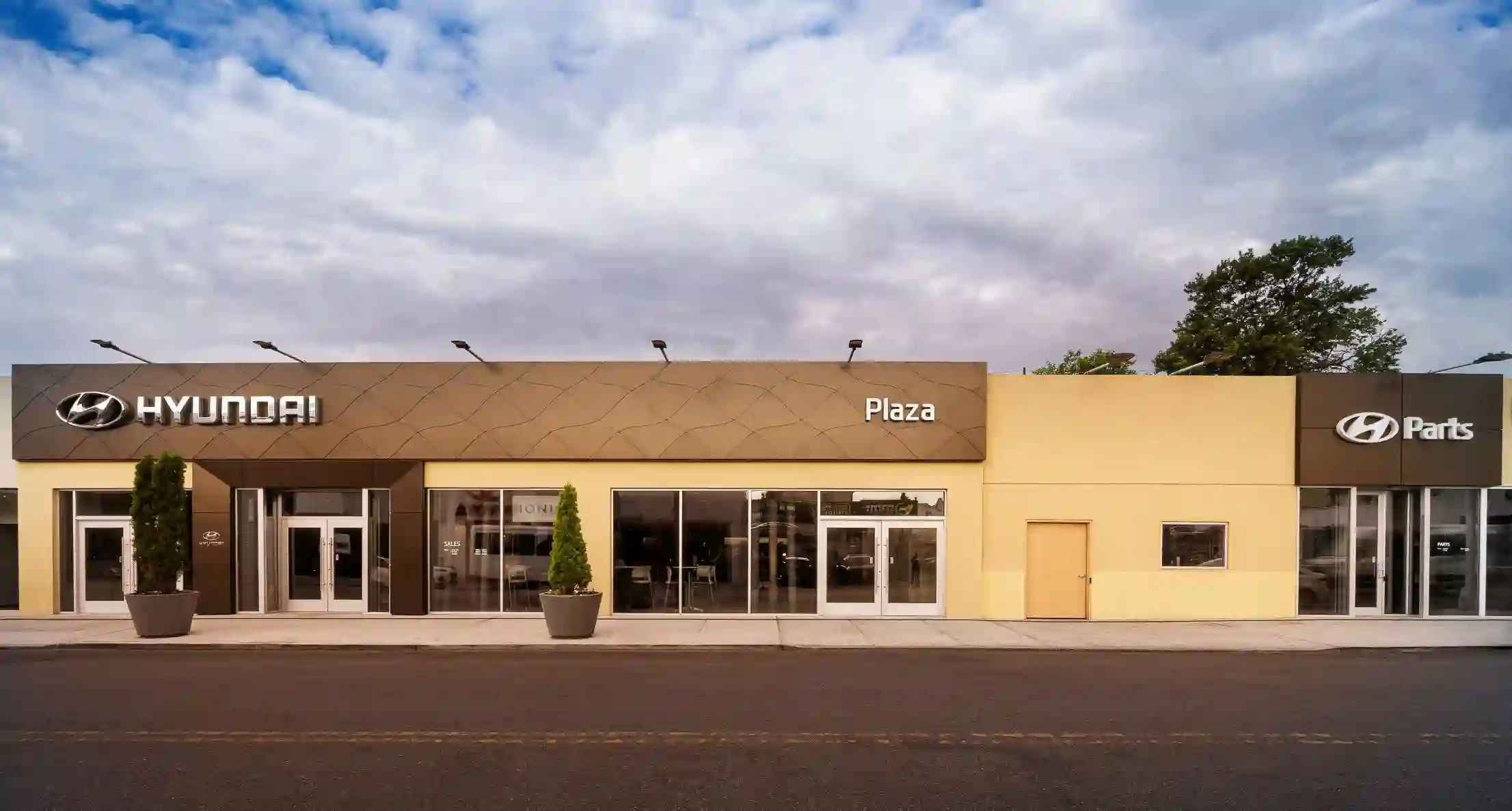
Plaza Hyundai — part of Plaza Auto Mall
Plaza Hyundai sits on Nostrand Avenue as part of Plaza Auto Mall, a family-owned group serving New York City since 1975. The campus holds over 1,000 vehicles in stock, every rooftop within a seven-minute walk of the next — so if the Venue runs a size too small or too big, you can compare in person the same afternoon.
Our team speaks English, Spanish, Russian, Ukrainian, Georgian, Arabic, French, Urdu, Punjabi, Bengali, Uzbek, Tajik, Turkish, Haitian Creole, Polish, and more. Service offers pickup and drop-off across the NYC metro area, and we deliver purchased vehicles free within 25 miles. No Hassle, No Pressure, No Middlemen.
Jump to a section
What’s changing on the 2027 Hyundai Venue?
As of August 2026, Hyundai has not published U.S. specifications for a 2027 Venue. It is still listed as a 2026 model on Hyundai’s American site while Palisade, Elantra and Kona have rolled over to 2027 data. That gap points two directions at once.
Path one is a straight carryover. The Venue has been the quiet survivor of the lineup, outlasting the Accent and watching the Kia Soul, Nissan Versa and Mitsubishi Mirage leave the market. Industry watchers who track order guides have described the next Venue as another year of the current car — same 1.6-liter engine, same CVT, same front-drive layout, a color shuffle and a modest price bump.
Path two is the all-new car. Hyundai revealed a second-generation Venue in late 2025: boxier and more upright, with a longer wheelbase, dual widescreen displays and a much longer safety-feature list. It is already in production abroad, but whether it crosses to North America is unconfirmed — modest U.S. sales volume has to justify homologation and import costs. If it comes, industry expectation points to 2027 or 2028.
Everything below describes the 2026 Venue, because that is the car you can put a plate on this month.


When is the 2027 Hyundai Venue release date?
Hyundai has not announced a 2027 Venue on-sale date for the United States, and no official order guide pricing has been published as of August 20, 2026.
The timing pattern is worth knowing. Hyundai typically opens a model year through dealer order guides in late summer or early fall, with cars reaching showrooms six to twelve weeks later. The 2026 Venue followed exactly that rhythm — order guide data surfaced in late August 2025, and vehicles were on lots before year’s end. If 2027 is a carryover, expect the same: order guide in fall 2026, first New York deliveries late 2026 or early 2027.
A redesign stretches that. Federal certification, EPA testing and a full launch cycle add months, pushing the window toward mid-to-late 2027 — meaning the 2026 car would stay the current Venue in New York showrooms for a while yet.
If you are shopping now: waiting on an unannounced model with no confirmed date or price usually costs money. The 2026 Venue is in stock, its incentives are published and its pricing is known — and if the next one is a redesign, it will launch above today’s price. Check the lot first.


Will the 2027 Hyundai Venue cost more?
Almost certainly yes — the only real question is by how much.
The 2026 Venue SE starts at $20,550 before a $1,600 destination charge — about $22,150 delivered. That was a $350 increase over 2025, roughly 1.7 percent; the SEL moved up $625, about 2.8 percent. If 2027 is a carryover, plan on the same neighborhood.
A redesign is different. Coverage of the new-generation car has speculated at a U.S. entry point nearer $22,000 before destination, pushing a delivered base price toward the mid-$23,000s. Bigger and better-equipped almost always means a bigger sticker. Treat those as informed estimates, not announced pricing.
Build the warranty into your math too. Hyundai’s 5-year/60,000-mile limited warranty and 10-year/100,000-mile powertrain coverage remain among the strongest anywhere — the biggest argument for a new Venue over a used car at a similar number. Twenty thousand dollars of used vehicle buys more metal, not a decade of powertrain protection.


Hyundai Venue trims compared: SE, SEL with Two-Tone Roof, and SEL
The lineup is refreshingly short, which is part of the appeal. Three listings, but effectively two trims — the SEL splits into a moonroof version and a two-tone roof version, and you pick one.
| SE | SEL with Two-Tone Roof | SEL | |
|---|---|---|---|
| Starting MSRP | $20,550 | About $22,600 | About $22,825 |
| Engine | 1.6-liter four-cylinder, 121 hp and 113 lb-ft — identical across the range | ||
| Transmission / drive | Continuously variable automatic, front-wheel drive only (no AWD offered) | ||
| EPA fuel economy | 29 city / 33 highway / 31 combined (EPA estimates; your mileage will vary) | ||
| Wheels | 15-inch | 17-inch alloy | 17-inch alloy |
| Roof | Body color | Contrasting painted roof — no moonroof, but about an inch more front headroom | Power moonroof |
| Seating surfaces | Cloth | Cloth with simulated leather | Cloth |
| Heated front seats | — | Standard | Standard |
| Wireless charging | — | Standard | Standard |
| Touchscreen | 8-inch display with wireless Apple CarPlay and Android Auto, standard on every trim | ||
| Driver assistance | Forward Collision-Avoidance Assist, Lane Keeping Assist and Driver Attention Warning standard; Blind-Spot and Rear Cross-Traffic Collision Warning on SEL | ||
| Roof rails / drive modes | — | Standard | Standard |
Not available for 2027 — because it is not available for 2026 either: the Limited trim ended after 2025, with its most popular equipment (heated seats, wireless charging, heated mirrors) folded down into the SEL. Built-in navigation left with it, a non-issue now that CarPlay and Android Auto handle mapping wirelessly. The Denim trim ended after 2021. For either one, you are shopping used inventory, not new.


How today’s Venue compares with its last real update
A detail worth clearing up, because it gets misreported: the American Venue never got the mid-cycle facelift other markets did. Hyundai restyled it overseas around 2023 — revised grille, reworked lighting, updated interior — and that car never came here. The Venue sold in New York today is stylistically the same first-generation vehicle launched for 2020. So the last meaningful change for U.S. buyers was not a restyle at all. It was the 2026 lineup restructure:
- Limited dropped, SEL upgraded. Heated seats and wireless charging moved down to the mid-grade car — a content increase at a lower price point.
- The Two-Tone Roof arrived as its own SEL variant, and unusually it lists for slightly less than the standard SEL, trading the moonroof for a painted roof, simulated-leather seating and about an inch more front headroom.
- Built-in navigation left along with the Limited trim.
- Prices rose modestly — $350 to $625 depending on trim.
Coming out of a 2022 or 2023 Venue, the driving experience feels familiar. What changed is how much equipment you get at the trim most people actually buy. Cross-shopping upward? Our guides to the 2027 Kona and 2027 Elantra cover the common step-ups.
What makes the Venue work in New York City
Plenty of small SUVs claim to be city cars. The Venue has the dimensions to back it up. At roughly 159 inches long it is one of the shortest new vehicles on sale in America — about a foot shorter than a Chevrolet Trax or Nissan Kicks. In a city where the gap between parking and circling the block for twenty minutes is measured in inches, that is not a spec sheet detail. That is your Tuesday evening. What New York drivers notice:
- Garage clearance. A narrow track and low roof fit older Manhattan and Queens garages where taller crossovers scrape or fall outside standard rates.
- Alternate-side maneuvering. A short wheelbase and tight turning circle make the twice-weekly shuffle far less punishing than a mid-size SUV.
- Stop-and-go efficiency. A 29 mpg city rating matters more here than any highway number, because most New York miles are city miles.
- Cheap to insure and repair. A low-value, low-horsepower, front-drive car is a favorable insurance profile in a five-borough ZIP code — and in city driving, bumper contact happens.
- Real cargo room for the size. The 60/40 split seat opens genuine hauling space: a Costco run, a bike, a friend’s apartment move.
The honest caveat: the Venue is front-wheel drive only, at every trim. For most New York winters, FWD plus decent all-seasons is plenty — the city clears arterials quickly. But if you park on a steep Staten Island block or head north regularly, look at the Kona or Tucson, both available with AWD. Better to hear it now than in February.


Awards, recognition, and the good news
The Venue holds a distinction no competitor can claim: with the Mitsubishi Mirage and Nissan Versa out of production, it is the least expensive new vehicle sold in the United States. Edmunds and Cars.com have both made that point, and Cars.com has featured the Venue in its affordability reporting on best-value new cars.
- It is selling better, not worse. Venue sales climbed roughly 21 percent in 2025 — unusual this deep into a life cycle, and evidence the shrinking affordable-car segment left real demand on the table.
- Owners rate it well. Kelley Blue Book users score its reliability 4 out of 5, above average for the class.
- Reviewers like it more than they expected. MotorTrend called it small, slow and easy to like — then recommended it anyway.
- The brand keeps collecting hardware. Hyundai models continue to earn top IIHS marks, with the 2026 IONIQ 9 and Santa Cruz both taking Top Safety honors.
Shopping across the Plaza Auto Mall campus
The Venue competes with the Chevrolet Trax, Nissan Kicks and Kia Seltos — and the advantage of Plaza Auto Mall is that you can cross-shop alternatives on foot, in one visit.


Still deciding? See our guides to the 2027 Kia Seltos, the Honda HR-V comparison, or the 2027 Kia K4 if a sedan suits you better.
Frequently asked questions
Is the 2027 Hyundai Venue confirmed for the United States?
Not officially. As of August 2026, Hyundai has not published U.S. specs, trims or pricing for a 2027 Venue, and it is still listed as a 2026. Two outcomes are plausible: a carryover with minor changes, or the redesigned second-generation Venue already sold abroad. We will update this page when Hyundai releases official information.
What engine does the Hyundai Venue use, and can I get all-wheel drive?
Every Venue uses a 1.6-liter four-cylinder making 121 horsepower and 113 lb-ft, paired with a continuously variable automatic. No turbo option, no hybrid, and no all-wheel drive at any trim — the Venue is front-drive only. If AWD is a requirement, the Kona and Tucson are the natural next steps.
What kind of gas mileage does the Venue get in city driving?
EPA estimates are 29 mpg city, 33 highway and 31 combined on regular unleaded. In real New York conditions — stop-and-go, short trips, cold starts — the city figure is the one you live with.
How much cargo space does the Hyundai Venue have?
Roughly 18.7 cubic feet behind the rear seats, expanding to about 31.9 with the 60/40 bench folded — enough for a full grocery run, luggage for two, or a flat-pack furniture haul. The low, wide liftgate opening makes loading easier than the numbers suggest.
What is the difference between the SEL and the SEL with Two-Tone Roof?
Priced almost identically; the choice comes down to the roof. The standard SEL has a power moonroof. The Two-Tone version swaps it for a contrasting painted roof, adding roughly an inch of front headroom and simulated-leather seating — and it typically lists for slightly less. Both share 17-inch alloys, heated seats and wireless charging.
How does the Venue compare to the Hyundai Kona?
The Kona is larger, more powerful and more expensive, with available all-wheel drive and an all-electric variant. The Venue is smaller, simpler and typically several thousand less to start. If parking and city mileage are your main challenges, the Venue is usually the smarter buy; for a long highway commute, the Kona earns its premium.
Is the Venue practical for a family in the city?
For a couple, a small family with one or two children, or anyone mostly carrying one passenger, yes. The rear bench takes two adults or two child seats comfortably; three across is tight, and rear-facing infant seats cost the front passenger legroom. For three kids or a third row, look at the Tucson, Santa Fe or Palisade.
Will the Venue handle New York winters without all-wheel drive?
In most cases, yes. Front-wheel drive puts engine weight over the driven wheels, which helps in snow, and the city clears main roads quickly. Tires matter more than drivetrain — a good set of all-seasons, or winter tires if you park outdoors, will do more for traction. For unplowed hills or regular trips upstate, AWD is the better fit.
Can I get pre-approved at Plaza Hyundai without giving my Social Security number?
Yes. Our pre-approval application does not require a Social Security number or date of birth to start, so you can see where you stand before sharing sensitive information. Once you have picked a vehicle, our finance team walks through the full application with you — in whichever language you are most comfortable speaking.
Does Plaza Hyundai deliver, and can you pick up my car for service?
Both. We deliver purchased vehicles free within 25 miles, covering most of Brooklyn, Queens, Manhattan, Staten Island and near Nassau County. Our service department offers pickup and drop-off across the NYC metro area, so you can keep your parking spot. Collision work goes through Plaza Body Shop, also part of the group.
What brands can I shop at Plaza Auto Mall?
Five brands of new and certified pre-owned vehicles on one campus: Hyundai, Honda, Toyota, Kia and Acura. Every rooftop is a seven-minute walk from the next, with over 1,000 vehicles in stock — so you can compare a Venue against a Kia Seltos, a Honda HR-V and a Toyota Corolla Cross the same afternoon. For certified cars, our CPO process explains the inspection and warranty coverage.
Where can I browse used vehicles from all brands in one place?
Our full multi-brand used inventory is at plazaautomall.com/used-inventory — every pre-owned vehicle across the group in one listing, not just Hyundais. For a Hyundai specifically, browse used inventory or Hyundai Certified Pre-Owned, which adds factory-backed warranty coverage.
Hyundai Venue inventory in Brooklyn, NY
Below are the Hyundai Venue models currently available at Plaza Hyundai. Inventory turns over quickly at this price point. If the trim or color you want is not showing, we can locate it or place a factory order and keep you updated.
Before visiting, check current lease deals and specials, which move faster than published manufacturer incentives and often stack with them. Trading in? Our we buy cars team appraises your vehicle whether or not you buy from us. And if the Venue is not quite right, browse all new Hyundai SUVs.